Nobel Prize in Economic Sciences 2025
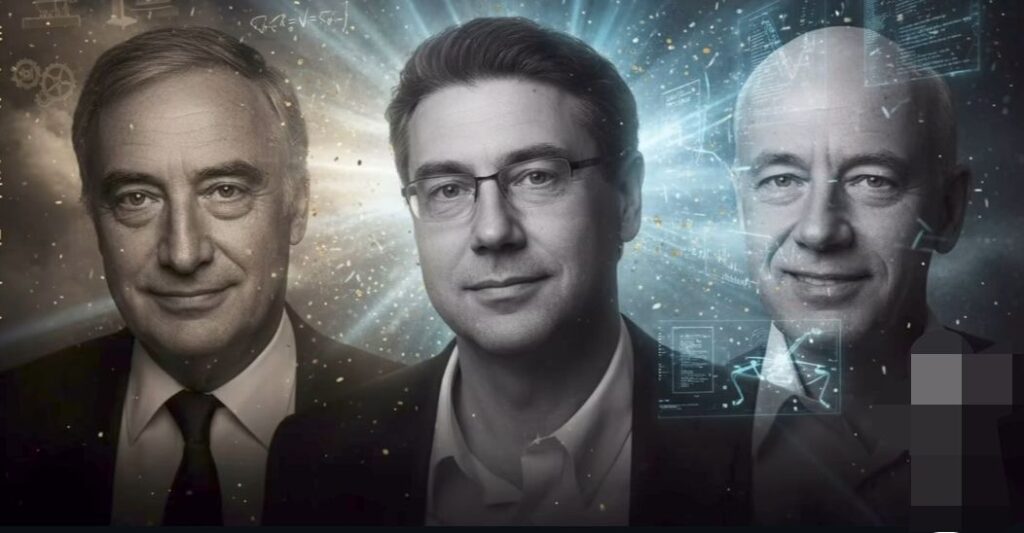
Northwestern University’s Joel Mokyr, a celebrated historian and economist, has been awarded the 2025 Nobel Prize in Economic Sciences for his groundbreaking research into how societies achieve lasting economic growth. Mokyr, who holds the title of Robert H. Strotz Professor of Arts & Sciences, shares the honor with economists Philippe Aghion and Peter Howitt.
Mokyr receives half of the Nobel Prize for developing a theory that explains the conditions required for sustained economic progress through technological advancement. The remaining half is jointly awarded to Aghion and Howitt for their influential work on “creative destruction,” a concept that describes how innovation continuously reshapes industries by replacing outdated systems with new ones.
Why Mokyr’s Nobel Win Matters
Growth Doesn’t Just Happen
Economic growth might seem like a natural process, but Mokyr’s research shows that it depends on a complex mix of factors. His work demonstrates that technological progress, practical knowledge, and supportive institutions must all work together to sustain prosperity. As the Nobel Committee highlighted, progress isn’t automatic — it must be nurtured and protected.
The Core Ingredients of Progress
Over decades of scholarship, Mokyr has explored how Europe’s cultural and intellectual environment between 1750 and 1914 laid the foundation for the Industrial Revolution. He argues that innovation thrives not just because of individual genius, but because of the social environments that encourage curiosity, experimentation, and the exchange of ideas.
Meanwhile, Aghion and Howitt’s model of creative destruction quantifies this process. Their research shows how each new wave of innovation revitalizes economies by displacing older technologies and business models — a cycle that fuels long-term productivity and development.
Lessons for the Modern World
The laureates’ findings are especially relevant today. Mokyr has warned that while emerging technologies such as artificial intelligence and biotechnology offer tremendous potential, societies must ensure that innovation remains open and competitive. Without the right institutions, dominant players can block newcomers, halting progress rather than advancing it.
Their collective message is clear: innovation must be encouraged — but also carefully governed — to ensure that its benefits are shared broadly across society.
About the Laureates
Joel Mokyr
Born July 26, 1946, in Leiden, Netherlands, Joel Mokyr is affiliated with Northwestern University in the United States and Tel Aviv University in Israel. The Nobel Committee recognized him “for identifying the prerequisites for sustained growth through technological progress.”
Over his distinguished career, Mokyr has authored several influential books, including A Culture of Growth: The Origins of the Modern Economy, The Lever of Riches, and The Enlightened Economy. His work blends economics, history, and culture, offering deep insight into how human ideas drive material progress.
Philippe Aghion and Peter Howitt
Philippe Aghion, of Collège de France and INSEAD, and Peter Howitt, of Brown University, developed formal mathematical models that describe how competition and innovation interact. Their theory of creative destruction — first popularized by economist Joseph Schumpeter — captures how economies renew themselves through continual transformation.
Their contributions have profoundly influenced how policymakers, scholars, and entrepreneurs think about growth, innovation, and the ever-evolving nature of capitalism.
The Bigger Picture
Joel Mokyr’s Nobel Prize recognizes more than a lifetime of academic achievement — it celebrates an enduring belief in human creativity. His research reminds us that progress isn’t inevitable, but it is achievable when societies invest in education, openness, and innovation.
As Mokyr himself has often said, “The past 150 years have been a miracle of progress — not for the wealthy few, but for ordinary people everywhere. That gives me great optimism for the future.”