Kathryn Bigelow’s A House of Dynamite
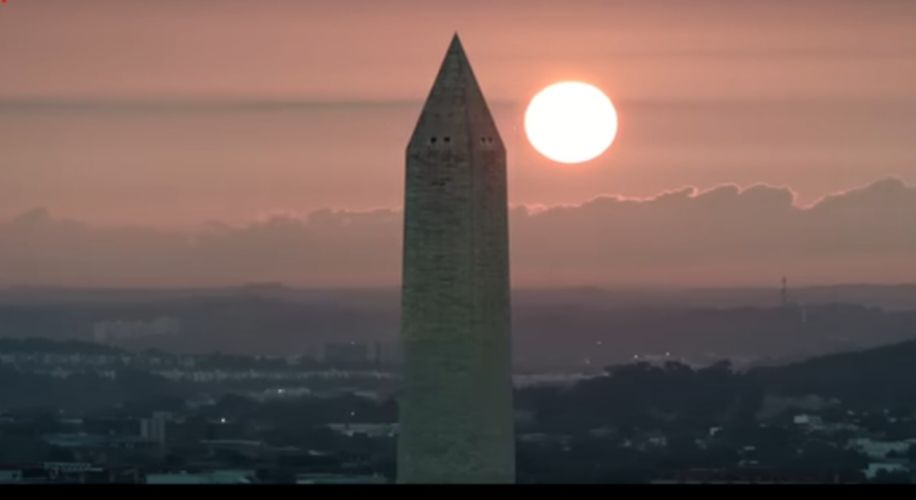
The thriller directed by Kathryn Bigelow plunges us into an almost unbearably tense scenario: an un-attributed nuclear missile hurtling toward the U.S., a ticking clock of less than 20 minutes, and top officials scrambling in darkness. In this fever pitch of suspense the film asks a singular question: what if the fate of humanity hinges on one person’s decision—fast, informed only by partial data, and under unimaginable pressure?
Much of the film’s praise stems from its premise, structure (the same 18 minute window shown three times from different vantage-points) and the chilling sense of systemic fragility. The major point of contention: the ending.
What actually happens at the end?
The missile is inbound for Chicago. The intercept fails. We follow the President, military brass, the White House situation-room and a missile-defence base in Alaska.
Then, just when the President is about to choose from the “Black Book” of retaliatory options, the screen cuts to black. No reveal of whether the bomb hits. No dramatic explosion. No “what comes next.”
Screenwriter Noah Oppenheim admits he knows what happens but refuses to tell, saying that the point is not the answer but the question of who holds that power and how fragile the system is.
The Case for “Brilliant”
The ambiguous ending reinforces the film’s central theme: the system, not the villain, is the real threat. By not naming a perpetrator and not resolving the climactic moment, it forces the viewer to sit with the anxiety rather than be comforted.
It turns the film into more than a disaster movie; it becomes a parable about how unprepared and precarious modern deterrence systems are. One critic wrote: “The movie refuses a rational picture of cause and effect.”
Bigelow herself frames the ending as a “call to action” — that the fact the bomb may or may not go off is less important than the fact we live in a world where such a scenario is possible.
If one sees the film as less about spectacle and more about interrogation of power, trust, and risk, the unresolved ending is a bold, thought-provoking move.
The Case for “Cop-Out”
For traditional movie-goers expecting catharsis, resolution, or a clear “We survive!” or “The bomb hits!” moment, the fade-to-black can feel deeply unsatisfying. One critic wrote: “We just sat through two of the tensest hours … after all that, we don’t get the satisfaction of things being tied up neatly.”
Structurally, some viewers feel cheated: the film builds up a massive crisis, multiple perspectives, escalated stakes — then denies the payoff. Reddit viewers say things like:
> “All of that extra stuff to lead to nothing.”
“By the time I got to the end … I said ‘that’s it?’”
The repetition of the same 18-minute sequence from three perspectives, combined with the unresolved finish, gives some a sense of diminishing return: great setup, less satisfying development, no traditional payoff.
For many viewers, a film that builds suspense must deliver some kind of catharsis or clear outcome — and here, the lack thereof risks feeling like the filmmakers pulled the punch.
My Take
Having weighed both sides, here’s how I lean: The ending works, but only if you’re in the right mindset. If you come expecting a neat triumph, a definitive explosion, or a hero’s rescue — you’ll likely walk away frustrated. But if you accept the film’s ambition — to unsettle, to provoke reflection, to leave you in the uncertainty — then the ending is indeed smart and fitting.
In fact, the ending should be unresolved. The film’s core message is: the system is always at risk, even when we think we’re prepared. If the bomb did go off or didn’t, if the retaliation happened or didn’t — either way doesn’t change the core fear: we were only ever a coin-toss away. And in that sense, not showing the explosion is far more disturbing.
That said — I understand the criticism. Cinema is also an experience, and after two hours of mounting dread, many will feel they deserve something. The film’s structure doesn’t lend itself to “something” in the conventional sense, and for some that will be a deal-breaker.