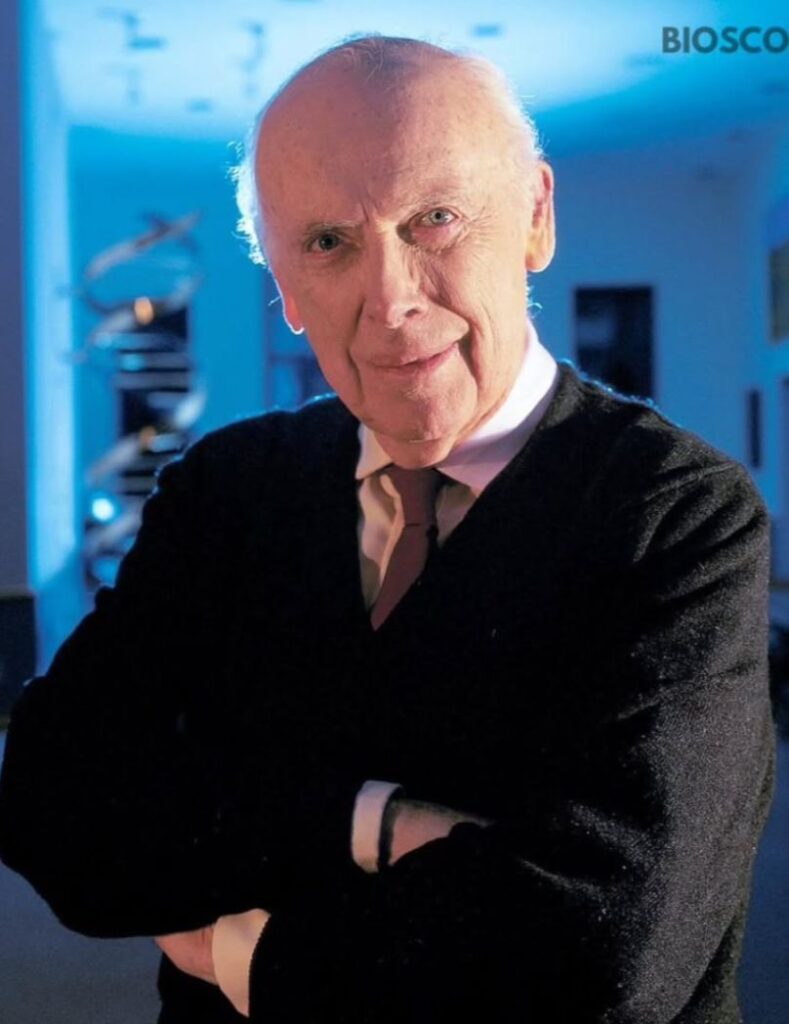
James Watson, the American molecular biologist best known for helping reveal the double-helix structure of DNA, has died at age 97 after a brief illness, according to Cold Spring Harbor Laboratory, where he spent most of his scientific career.
Watson rose to international prominence in 1953 when, alongside Francis Crick and Maurice Wilkins, he unveiled the iconic twisted structure of DNA — a breakthrough that changed the course of biology and medicine. The trio was awarded the Nobel Prize in Physiology or Medicine in 1962, recognition of a discovery that laid the foundation for modern genetics and paved the way for research into how heredity, disease and evolution function at the molecular level.
Born in Chicago in 1928, Watson’s fascination with nature began early. He entered the University of Chicago as a teenager and later earned his PhD at Indiana University, where his interest turned toward viruses and genetic material. His move to the Cavendish Laboratory in Cambridge placed him at the center of a growing scientific race to uncover DNA’s structure.
However, Watson’s legacy remains complicated. While his scientific contributions were groundbreaking, his reputation was deeply damaged in later years due to several public comments in which he made racist, sexist and homophobic claims suggesting genetic differences between groups of people. These remarks led Cold Spring Harbor Laboratory to remove his remaining honorary titles.
Watson’s career extended far beyond the double helix. He authored the influential textbook Molecular Biology of the Gene, helped elevate Cold Spring Harbor Laboratory into a major research center, and was the first director of the Human Genome Project — the ambitious effort to map the entire human genetic blueprint.
In 2014, Watson became the first living Nobel laureate to sell his medal, saying proceeds would support scientific research. The buyer later returned the medal to him.
Despite the scientific achievement that defined his early life, Watson’s later years were overshadowed by controversy, leaving a legacy that continues to generate debate across both scientific and public communities.