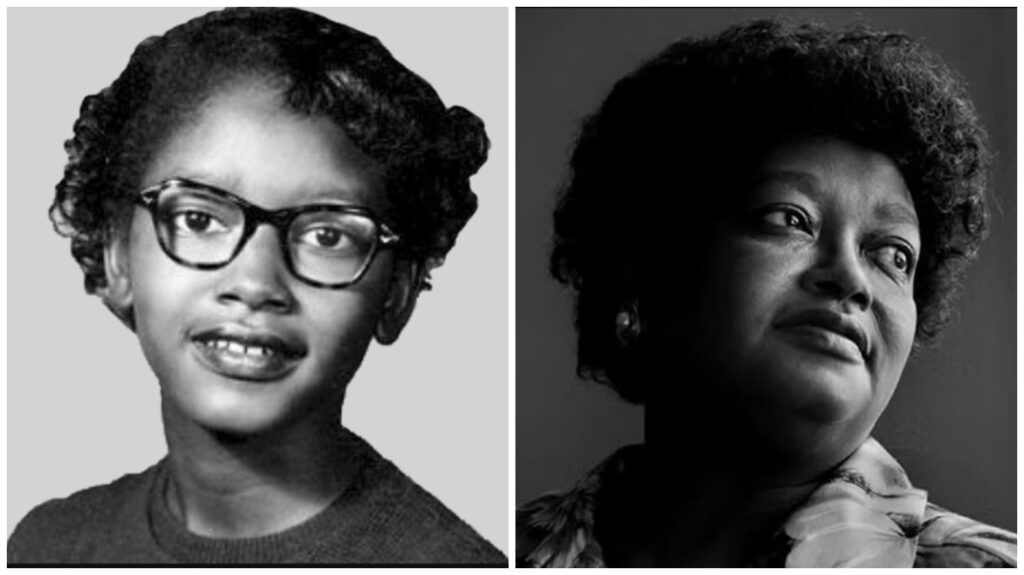
History often remembers movements through a few iconic names, but behind every well-known figure are countless others whose bravery helped shape change. Claudette Colvin was one of those heroes.
Colvin, a civil rights pioneer who quietly helped dismantle segregation in the United States, passed away on Tuesday at the age of 86. Though her name remained unfamiliar to many for decades, her courage at just 15 years old played a critical role in the fight for racial equality—long before Rosa Parks’ more famous stand.
In March 1955, nine months before Rosa Parks’ historic act, Claudette Colvin refused to give up her bus seat to a white woman in Montgomery, Alabama at the age of just 15. At the time, Jim Crow laws strictly enforced racial segregation, especially on public transportation. Black passengers were expected to move or surrender their seats whenever a white person demanded them.
Colvin didn’t.
She later recalled that she had been learning about abolitionist heroes like Harriet Tubman and Sojourner Truth in school. Their stories were fresh in her mind when the bus driver ordered her to move. Instead, she stayed seated. Police officers forcibly dragged her off the bus and arrested her.
In her own words, she felt that history itself had “glued her to the seat.”
Despite her bravery, Claudette Colvin was not widely embraced as the face of the civil rights movement. Civil rights leaders of the time believed that Rosa Parks—a respected adult, a churchgoing seamstress, and secretary of the local NAACP chapter—would be a more relatable and “acceptable” figure for the public.
Colvin, by contrast, was young, poor, and darker-skinned. Issues of class, colorism, and social perception influenced leaders’ decisions. Later, when she became pregnant through what she described as statutory rape, her image was further stigmatized.
These harsh realities meant that Colvin’s story faded into the background, even though she had taken her stand first.
Although she wasn’t made the public face of the movement, Colvin played a crucial role behind the scenes. She became one of the key plaintiffs in the landmark case Browder v. Gayle, which challenged Montgomery’s bus segregation laws.
Her testimony helped bring about a monumental victory: in 1956, the U.S. Supreme Court ruled that segregation on public transportation was unconstitutional.
That ruling officially ended bus segregation in Montgomery and marked a major turning point in the civil rights movement.
Fred Gray, the attorney who argued the case, later said that Colvin gave the movement its moral backbone. He credited her with helping ignite the fight that would eventually reshape the nation.
After her moment in history, Colvin did not live a life of fame. She worked as a nurse’s aide and caregiver, raising her children as a single mother and facing financial struggles. For many years, her contributions were largely ignored.
It wasn’t until later in life that historians, authors, and activists began telling her story.
In a powerful moment of long-overdue recognition, Colvin succeeded in having her juvenile arrest record expunged—a symbolic victory that erased the stain of a charge that should never have existed.
Claudette Colvin’s story reminds us that change often begins with ordinary people doing extraordinary things. She wasn’t seeking fame. She was a teenager who believed in justice.
Her courage shows us that history is not only made by famous names but also by those whose stories were sidelined, forgotten, or ignored.
Today, as we reflect on her life, it’s important to honor her not as a footnote—but as a pioneer.
Because without Claudette Colvin, the road to equality might have been much longer.