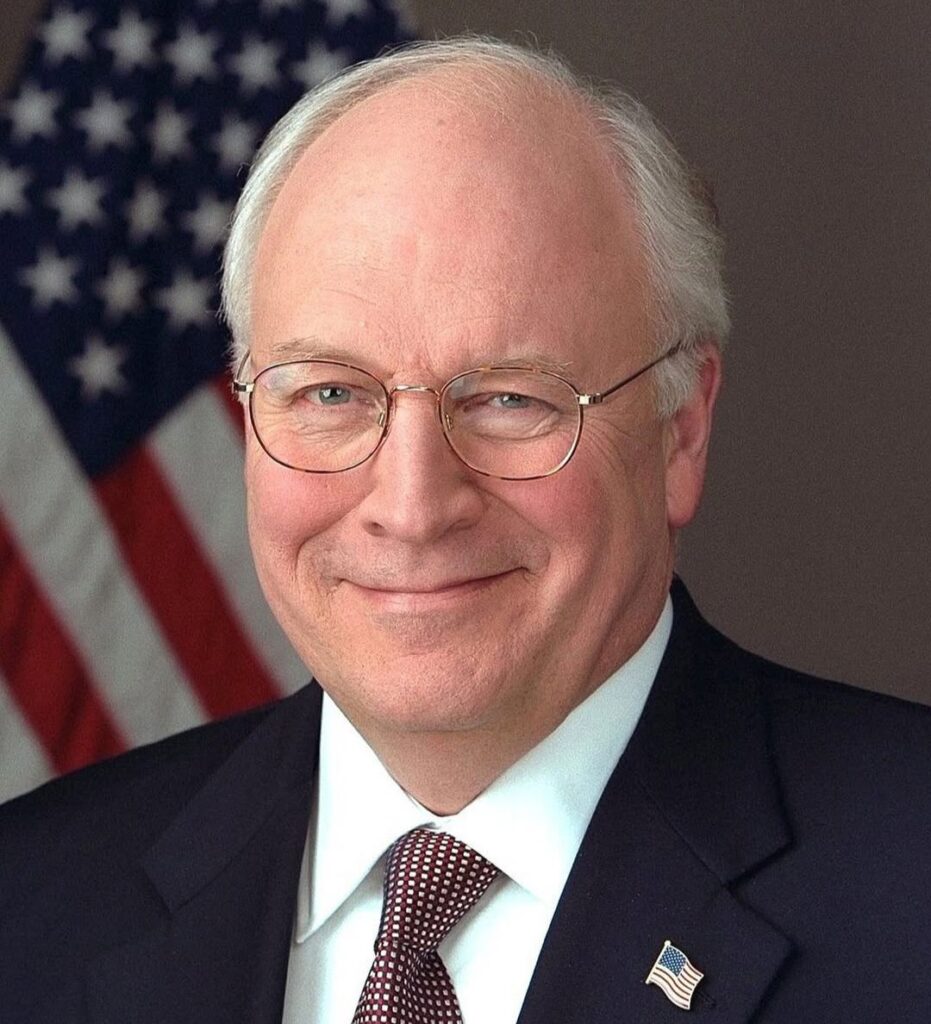
Former U.S. Vice President Dick Cheney Dies at 84: Remembering a Defining Political Legacy
Former U.S. Vice President Dick Cheney, one of the most influential and controversial figures in modern American politics, has died at the age of 84. His family confirmed that Cheney passed away peacefully on November 3, 2025, surrounded by his loved ones, following complications from pneumonia and longstanding cardiac and vascular disease.
> “Richard B. Cheney, the 46th Vice President of the United States, died last night. His beloved wife, Lynne, his daughters Liz and Mary, and other family members were with him as he passed,” the family said in a statement. “We are deeply grateful for his service to our nation and for the love and strength he brought to our family.”
A Lifetime of Service
Born January 30, 1941, in Lincoln, Nebraska, and raised in Casper, Wyoming, Cheney’s journey from the American heartland to the highest levels of power was marked by ambition, discipline, and political instinct. After earning both his undergraduate and graduate degrees from the University of Wyoming, he began his Washington career as an aide in the Nixon and Ford administrations, eventually serving as White House Chief of Staff under President Gerald Ford.
He went on to represent Wyoming in the U.S. House of Representatives for six terms and later served as Secretary of Defense under President George H.W. Bush, overseeing the successful military campaign during the 1991 Gulf War.
The Bush Years and the “War on Terror”
Cheney’s most defining role came as Vice President under George W. Bush from 2001 to 2009. Following the September 11, 2001 terrorist attacks, Cheney emerged as a central architect of America’s “War on Terror,” shaping policies on Iraq, Afghanistan, and counterterrorism operations that would define a generation of U.S. foreign policy.
A staunch advocate for strong executive power and aggressive national defense, Cheney was both revered and criticized for his hardline stances. Supporters viewed him as a guardian of national security; critics saw him as the embodiment of government overreach and secrecy.
In a 2008 interview, Cheney stood by his record: “If I were faced with those circumstances again, I’d do exactly the same thing.”
Health Struggles and Later Years
Cheney battled serious heart problems for most of his adult life, surviving multiple heart attacks and undergoing a heart transplant in 2012. Despite his health challenges, he remained active in public life—writing, giving speeches, and supporting his daughter Liz Cheney’s political career.
In his 2011 memoir, In My Time, Cheney reflected on his decades in Washington with characteristic bluntness and unapologetic conviction.
Legacy of a Political Titan
To his admirers, Cheney was a patriot and strategist, a man who shaped U.S. defense and energy policy for nearly half a century. To his detractors, he was a symbol of secrecy and power unchecked. Yet few would deny his lasting impact on American governance and global politics.
Cheney is survived by his wife of 61 years, Lynne Cheney, daughters Elizabeth and Mary, and seven grandchildren. His life’s story—spanning small-town Wyoming to the White House Situation Room—remains one of the most consequential in U.S. political history.