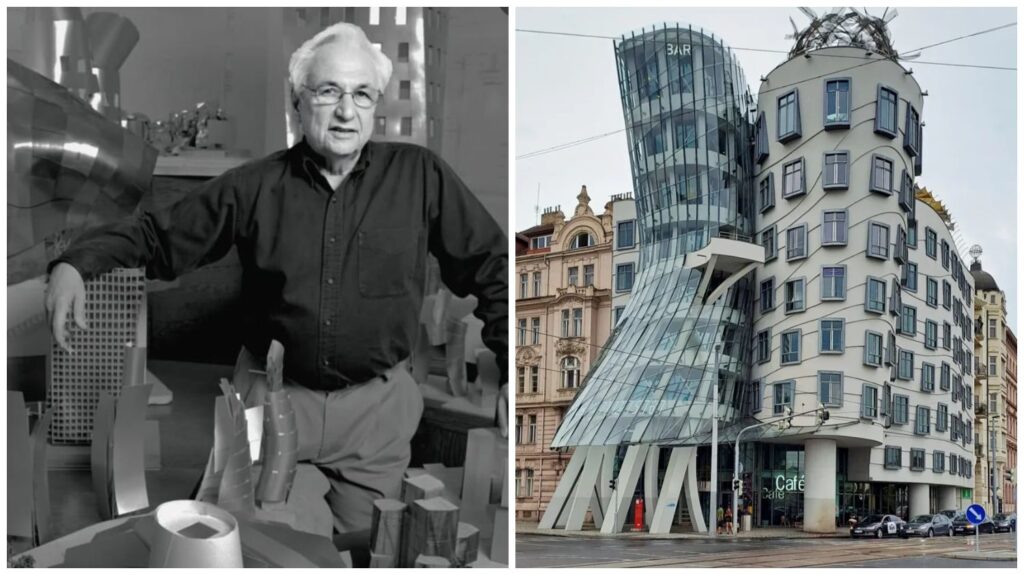
Frank Gehry, the visionary architect whose daring, sculptural buildings reshaped skylines around the world, has died at 96. A spokesperson for Gehry Partners confirmed that he passed away at his Santa Monica home after a brief respiratory illness.
Born in Toronto, Gehry moved to the United States as a young man, studying architecture at the University of Southern California before continuing urban-planning studies at Harvard. In 1962, he established his own firm in Los Angeles — a city that became both his workshop and his muse.
His career took a dramatic turn in 1978 when he remodeled his modest Santa Monica home using unconventional, everyday materials: corrugated metal, plywood, fencing, and cinder blocks. What began as a personal experiment soon sparked wide attention for its boldness and raw honesty. “A few people got excited about it,” Gehry once joked, but the project ultimately opened the door to the global stage.
Gehry’s rise accelerated when he won the Pritzker Architecture Prize in 1989, cementing his place among the world’s most influential architects. Yet his defining moment came later, with the commission for the Guggenheim Museum Bilbao — a shimmering, titanium-clad landmark completed in 1997 that critics and visitors regarded as nothing short of revolutionary. The building’s swirling, organic shapes, created with aerospace-level design software, reimagined what a museum — or any building — could be.
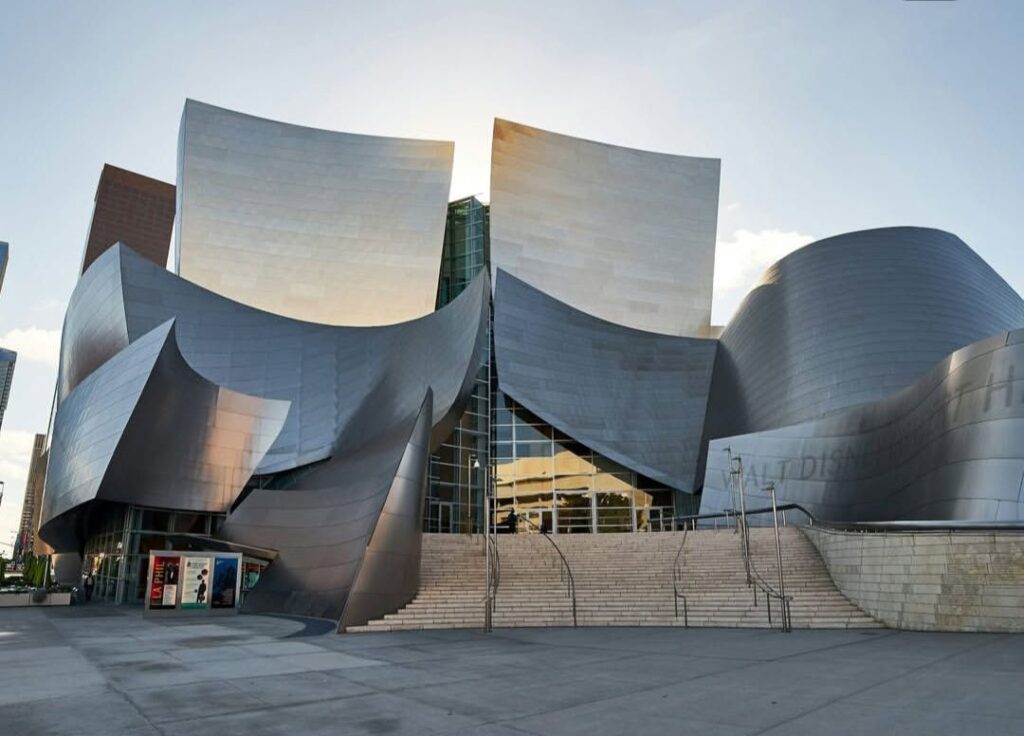
The Bilbao museum triggered what became known as the “Bilbao effect,” injecting new life into the city and proving architecture’s power to transform entire communities. The late architect Philip Johnson famously described Gehry at the time as “the greatest architect we have today.”
Throughout his career, Gehry drew creative inspiration from unexpected places — fish forms, Japanese temples, music, and even his love of ice hockey. His signature approach led to a string of celebrated works, including Seattle’s Museum of Pop Culture, Los Angeles’ Walt Disney Concert Hall, and Paris’ Louis Vuitton Foundation. In 2016, President Barack Obama awarded him the Presidential Medal of Freedom for his contributions to art and culture.
Despite his global fame and his unmistakable sculptural style, Gehry often portrayed himself simply as a curious designer following instinct, not spectacle. His buildings, however, told a different story — one of fearless imagination and a lifelong commitment to reshaping the built world.
Frank Gehry leaves behind a legacy of daring innovation and a portfolio of structures that continue to captivate, challenge, and inspire.