Super Typhoon Ragasa Slams Northern Philippines, Millions Across Asia on Alert
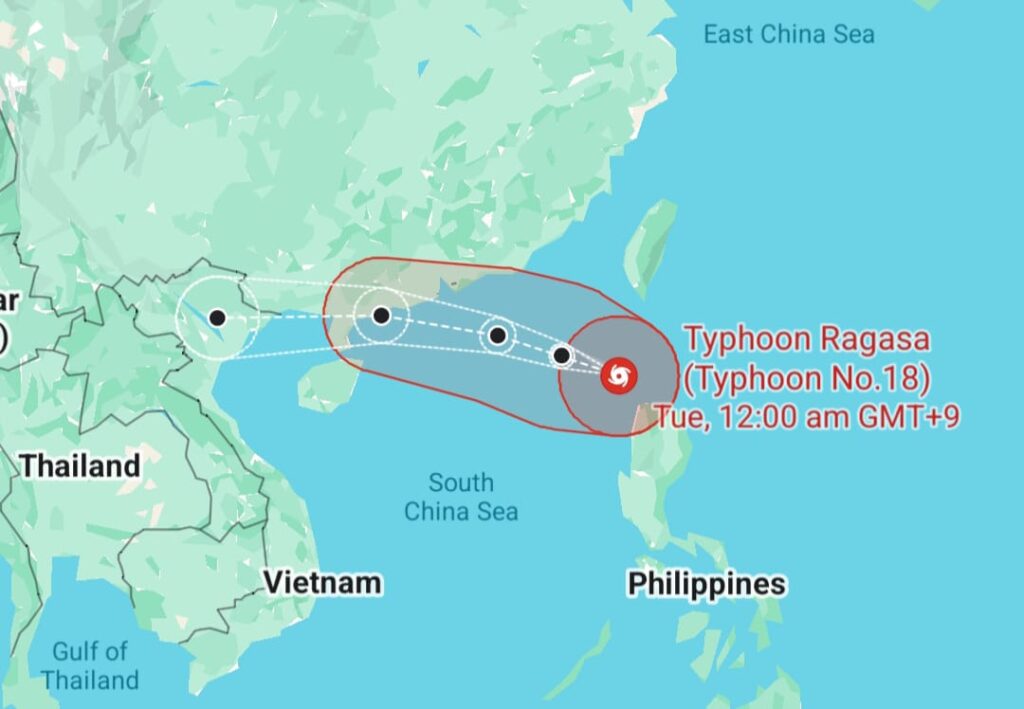
Image Credit : Japan Meteorological Agency
Manila, Philippines – Super Typhoon Ragasa (locally named Nando), the world’s most powerful storm of 2025 so far, made landfall on Panuitan Island in the Babuyan archipelago on Monday, bringing catastrophic winds, torrential rain, and life-threatening storm surges.
The Philippine weather bureau (PAGASA) reported Ragasa packing wind gusts up to 285 km/h (177 mph), equivalent to a Category 5 hurricane. Despite weakening slightly after landfall, the storm continues to pose severe risks, including storm surges of over 3 meters (10 feet), flash floods, and landslides across northern Luzon.
Thousands Evacuated, Widespread Disruptions
More than 10,000 residents have been evacuated across northern and central Luzon as authorities raised the highest tropical cyclone wind signal. In Manila and 29 surrounding provinces, government offices, schools, and businesses have been suspended. Power outages were reported in parts of Cagayan and Apayao provinces, while hospitals were placed on high alert.
On Calayan Island, fierce winds tore roofs off buildings, with debris damaging an evacuation center. “There were eight coconut trees standing before the storm—now only four remain,” said local official Herbert Singun, underscoring Ragasa’s destructive force.
Regional Impact: Hong Kong, Taiwan, and China Prepare
Although Ragasa will not make direct landfall in Taiwan, its outer rainbands are expected to unleash over 400 mm (15 inches) of rain, forcing closures of nature trails, ferry suspensions, and precautionary evacuations in Hualien County.
The typhoon is forecast to track westward toward southern China and Hong Kong, with winds projected to remain above 200 km/h (124 mph) by Wednesday. Authorities in Guangdong province have begun relocating 400,000 people from flood-prone areas, while Hong Kong announced widespread school closures, suspended ferry routes, and the cancellation of more than 500 flights.
Climate Change and Supercharged Storms
The Philippines faces several typhoons annually, but climate experts warn that warming oceans fueled by climate change are intensifying storms like Ragasa, making them more unpredictable and destructive. The country, home to some of the world’s most vulnerable coastal communities, continues to bear the brunt of these increasingly extreme weather events.
Looking Ahead
As Ragasa barrels west, forecasters warn of continued flooding, storm surges, and transport chaos across the Philippines, Taiwan, and southern China. Authorities urge residents to remain in evacuation shelters and avoid coastal areas until the storm system passes.
With tens of millions of people across Asia in its projected path, Typhoon Ragasa serves as a stark reminder of the growing risks supercharged tropical storms pose in a warming climate.