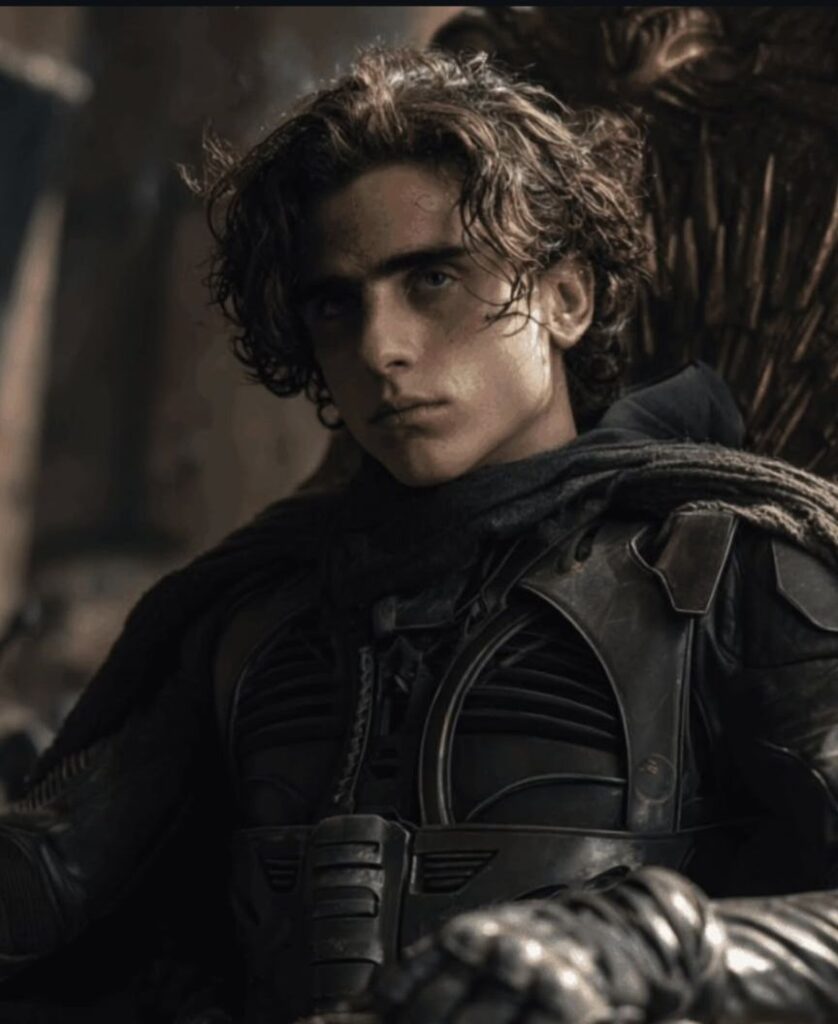
The sands of Arrakis have stirred once again—and this time, the tone is undoubtedly far darker and more somber.
The first glimpse of *Dune: Part Three* has arrived, offering a striking vision of a transformed world—one where victory has come at a steep price. Timothée Chalamet’s character, Paul Atreides, is no longer the reluctant hero audiences followed through the first two films. Instead, he now appears far more hardened, solitary, and burdened by the heavy consequences of his ascent to the pinnacle of power.
Set several years after the events of *Part Two*, this film shifts away from the narrative of a large-scale rebellion, pivoting toward a far more personal and perilous trajectory: it has now evolved into a political thriller. Paul reigns as Emperor, yet his grip on power remains incredibly fragile. His blazing “Fremen Jihad” rages across the entire universe—igniting both fierce loyalty and intense opposition within the hearts of humanity.
What immediately stands out in the initial footage is just how different everything feels. The epic grandeur and spectacle remain intact, yet they are now overlaid with a palpable tension, paranoia, and a pervasive sense of quiet unease. This is no longer merely a story about seizing power—it is, rather, a story about survival through the maintenance of power.
One of the most talked-about aspects is Robert Pattinson’s debut in the role of Scytale. Undergoing a radical physical transformation—sporting stark white hair and exuding a cold, calculating presence—his character signals a threat that is not merely physical, but deeply psychological. In contrast to the villains of previous installments, Scytale emerges as the embodiment of cunning manipulation, conspiracy, and internal subversion. His arrival signals that Paul’s greatest enemies may not be found on the battlefield, but rather lurking within the very heart of his own empire.
The returning characters, too, reflect the passage of time and the emotional weight and impact of Paul’s reign. Zendaya’s character, Chani, is now seen maintaining a far greater emotional distance—shaped by experiences of ideological conflict and personal betrayal. Florence Pugh’s character, Irulan, emerges more prominently in the political arena as Paul’s strategic ally through marriage—though their mutual relationship remains fraught with tension, existing merely as a formal or symbolic bond.
Meanwhile, Jason Momoa’s surprising return as Hayt introduces one of the story’s most intriguing elements—a resurrected character with roots deeply embedded in Paul’s past, now raising fresh questions regarding fundamental themes of identity, loyalty, and control.
Director Denis Villeneuve has made it clear that this installment is not merely the final chapter of a conventional trilogy. Rather, it has been crafted to stand tall on its own, possessing a distinct identity and a unique tone that sets it apart from the others. This intention is already evident in the film’s inclination toward psychological drama and moral complexity.
While previous films focused on themes of destiny and revolution, the “Third Part” explores the aftermath—specifically, what happens when a messianic figure transforms into a ruler, and whether such immense power can ever truly remain uncorrupted.
With a scheduled release date of December 18, 2026, *Dune: Part Three* is poised to become something far greater than just a mere conclusion or finale. This is, at its core, a radical transformation of the story—a transformation that simultaneously confronts both its protagonist and the audience with a formidable challenge.
If its first glimpse serves as any indication, it suggests that this final chapter will not merely expand the world of *Dune*, but will redefine it entirely.